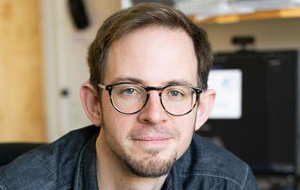
Dan Koch
Research Focus
We study how the timing and temporal patterns of molecular signals—like adrenaline or growth factors—shape the behaviour of heart cells and other cell types, influencing processes such as growth, differentiation, and contraction during the heartbeat. Disruptions of these signalling processes can lead to heart rhythm disorders, scarring (fibrosis), and heart failure. Our goal is to understand how the dynamic nature of these signals (e.g., gradual, sudden, or periodic) affects cellular responses.
Why is this work important?
Most of what we know about how heart cells respond to drugs or signals such as (nor-)adrenaline comes from experiments using constant stimuli. But in the body, signals are always changing—hormones like adrenaline fluctuate with physical activity or stress, and cells must adapt to these dynamic environments. By studying these processes, we aim to uncover new ways to design therapies that modulate signal dynamics rather than just targeting new molecules.
What techniques and equipment are used in this laboratory?
We are an interdisciplinary group bridging approaches from biology, physics, and medicine:
- Microfluidic cell culture (“heart-on-a-chip”) to mimic dynamic environments.
- Live-cell imaging (e.g., calcium, FRET/KTR biosensors) to track cellular responses in real-time.
- Molecular/cellular biology approaches (RT-qPCR, immunofluorescence, Western blotting).
- Mathematical modelling, dynamical systems approaches (e.g., bifurcation analysis) and data analysis (especially time-series) to decode complex cellular behaviours.
About Dr. Daniel Koch
Dr. Daniel Koch is an assistant professor in the Department of Pharmacology and Therapeutics at the University of Manitoba, a principal investigator at the St. Boniface Hospital Albrechtsen Research Centre and a member of the Maud Menten Institute.
Following studies in philosophy and medicine, Dr. Koch completed a Master’s degree in Cardiovascular Sciences and a PhD in Cell Biology at King’s College London, where he developed a strong interest in cardiac cell biology. To better address the inherent complexity of living systems, he was supported by a fellowship from the European Molecular Biology Organization (EMBO) to pursue postdoctoral training in dynamical systems theory at the Max Planck Institute for Neurobiology of Behaviour in Bonn, Germany.
Dr. Koch’s research aims to understand how cells process and actively contribute to the complex information in their environment and how disruptions of these processes contribute to disease, particularly in the heart. His highly interdisciplinary approach has contributed to new insights into signalling mechanisms in the heart and beyond. A central emphasis of his work is on biological behaviour over time rather than static states, providing conceptual frameworks for understanding living systems in continuously changing environments.